Articles

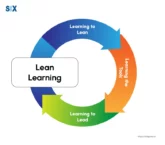
Image: Lean Learning

What is Lean Learning? Tips, Techniques, and Implementation

Lean Learning is a powerful methodology that combines the principles of lean management with the art of continuous learning and improvement.  Companies and industries always need to optimize their processes to maximize their efficiency and deliver extraordinary value to customers. Embrace Continuous Improvement with Lean Learning Equip yourself with the foundational mindset and practical tools […]
View More

Image: How to Improve Process Efficiency? Strategies, Tools, and Best Practices

How to Improve Process Efficiency? Strategies, Tools, and Best Practices

The competition is fiercer than ever, so organizations are looking for ways to win. Process efficiency plays a critical role in a company’s success.  Process efficiency lies at the heart of operational excellence, influencing productivity, cost-effectiveness, customer satisfaction, and, profitability.  Transform your organization’s operational performance through proven waste elimination techniques Learn the core principles that […]

View More

Featured Image: Everything About Process Decision Program Chart (PDPC)

Everything About Process Decision Program Chart (PDPC)

To detect and mitigate potential problems in their processes, organizations can use Process Decision Program Chart (PDPC). PDPC enhances process reliability, improves quality, and prevents costly mistakes by systematically mapping out tasks, anticipating possible failures, and developing countermeasures. Kickstart Your Process Improvement Journey with Six Sigma Yellow Belt Training! Take the first step towards becoming […]

View More

Image: Standardized Work

Standardized Work in Lean Manufacturing. Everything to Know

Standardized work is a foundational element of lean manufacturing and continuous improvement. Six Sigma certification offers advanced tools to strengthen process optimization alongside these practices. It refers to the process of documenting the best and most efficient way to perform a task or a series of tasks, and then training employees to follow those standardized […]

View More

Image: Control Limits in Six Sigma

What are Control Limits? Leveraging Statistical Boundaries for Process Excellence

One indispensable tool that has consistently proven its value across various industries is the concept of control limits within Statistical Process Control (SPC). Control limits are the guardrails that delineate the acceptable range of variation within a process, acting as sentinels for detecting deviations and anomalies that could compromise quality and consistency.  By establishing these […]

View More

Image: Process Control in Lean Six Sigma

Process Control in Lean Six Sigma. Techniques & Implementation

Process control is a fundamental aspect of modern industrial and manufacturing operations. It refers to the systems, technologies, and methodologies used to monitor, regulate, and optimize the performance of manufacturing processes, production lines, and other complex operational environments. Want to become a process optimization expert who can transform industrial operations? Learn the tools and techniques […]

View More

Image: Process Variation in Lean Six Sigma

Process Variation in Lean Six Sigma. Everything to Know

Process variation is one of the most common obstacles I encounter that prevents organizations from reaching their potential.  At its core, process variation refers to uncontrolled or unexpected differences in a process’s outputs. While some degree of natural variability exists in all processes, excessive variation is the enemy of efficient, high-quality operations. Master Process Variation […]

View More

Image: Process Capability Index (Cpk) for Business Success

Six Sigma Principles. Process Capability Index (Cpk) for Business Success

The process capability index, or Cp and Cpk for short, is a crucial tool for monitoring and controlling how much variation a process encounters about its specification limitations. These statistical measures offer insightful information about how well a process is operating and what actions could be required to make improvements. Master Statistical Process Control with […]

View More

Image: Process Failure Mode & Effects Analysis (PFMEA) in Lean Six Sigma

Process Failure Mode & Effects Analysis (PFMEA) in Lean Six Sigma

Even the most well-designed processes can be susceptible to failures, which can lead to defects, delays, and costly consequences. To proactively identify and mitigate potential risks, companies employ a powerful risk assessment tool known as Process Failure Mode and Effects Analysis (PFMEA). Master Risk Assessment with Six Sigma Yellow Belt Certification Transform your approach to […]

View More

Image: Capability Analysis for Process Improvement

Comprehensive Guide to Capability Analysis for Process Improvement

Capability analysis is a powerful statistical technique that allows companies to quantify their ability to meet customer specifications and requirements. By evaluating the performance of a process or characteristic against defined tolerance limits, capability analysis provides valuable insights into process potential and actual performance levels. Learn to quantify and improve process performance Master Capability Analysis […]

View More

Image: Rolled Throughput Yield (RTY)

Gain a Competitive Edge with Rolled Throughput Yield (RTY)

Companies need to optimize their production processes and guarantee top-notch quality. One metric that’s rising in importance is Rolled Throughput Yield or RTY for short. RTY gives the full picture of how much usable product is getting made when you consider the cumulative impact of any flaws or hiccups that happen at each stage of […]

View More

Image: Drive Business Growth and Capability with Process Maturity

Drive Business Growth and Capability with Process Maturity

Process maturity refers to the state of improvement and evolution of business processes within an organization. It indicates how consistently and effectively processes are managed, controlled, measured, and optimized over time. Learn systematic approaches to process optimization Transform your organization’s operational performance with Lean Six Sigma Green Belt Certification. Key Highlights Introduction to Process Maturity […]

View More

Featured Image: Improve Process Capability and Performance with Process Performance Index

Improve Process Capability and Performance with PpK

PpK, aka Process Performance Index, measures how much a process varies overall and how well it can consistently match the requirements for a given good or service. Take your first step towards understanding industrial performance metrics Unlock the secrets of process performance metrics with Lean Six Sigma Green Belt Certification. To ascertain process capacity, the […]

View More

Featured Image: Lean Six Sigma Bell Curve

Normal Distribution in Lean Six Sigma. Learn the Bell Curve

Six Sigma is a quality management system that aims to decrease variance and errors in business processes. The strategy makes use of statistical analysis and a data-driven methodology to reduce inefficiencies in the process and attain enduring outcomes. Become a data-driven problem-solving expert Master the Bell Curve, your gateway to process excellence with Lean Six […]

View More

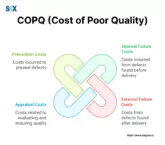
Image: COPQ (Cost of Poor Quality)

What is COPQ (Cost of Poor Quality)?

Quality issues can significantly impact a company’s profitability and reputation. To quantify the financial impact of poor quality, the concept of cost of poor quality (COPQ) is used. COPQ refers to all the costs associated with preventing, finding, and correcting defective work. It provides a metric to understand the cost of quality problems and drive […]

View More

Featured Image: KPIV (Key Process Input Variable) for Business Success

KPIV (Key Process Input Variable) for Business Success

Key Process Input Variables (KPIVs) play a vital role in process improvement initiatives. They are inputs to a process that has a significant influence on the process performance and quality of process outputs. By identifying and focusing on these vital input variables, organizations can drive effective analysis, monitoring, and improvements of their business processes. KPIVs […]

View More

Featured Image: Six Sigma Defects Per Million

A Complete Guide to Six Sigma Defects Per Million (2025)

Achieving consistent and predictable business process performance is crucial for delivering value to customers. However, variability, defects, and errors threaten this objective, eroding quality and driving up costs. To systematically enhance process capability, organizations leverage Six Sigma – a rigorous methodology centered on statistical thinking and defect elimination. Professionals equipped with a Six Sigma certification […]

View More

Project Management Training

PM4PI (Project Management for Process Improvements) Training Series by 6sigma

Most of us never have the large budgets of time and money of the largest and most publicized projects: those with teams of hundreds or even thousands and multi-million-dollar budgets.  Most of us work on projects with a few to a dozen team members, some or many part-time.  Our budgets are several tens or hundreds […]

View More

process behavior charts

Top 3 Process Behavior Charts

“Process behavior chart” or “control chart” is such a broad term. When you have decided to track the performance of a process visually using a process behavior chart as one of the tools, you have to settle on which chart type to use. While there a number of control charts to choose from, there are […]

View More

kano-model

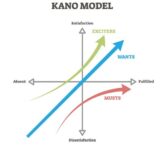
A Brief Intro to the Kano Model

There are many tools that Lean Six Sigma professionals can use for process improvement. You have probably heard of Kaizen, Kanban and Ishikawa, but have you heard of the Kano Model? It helps organizations prioritize customer satisfaction during product development to produce more value for the customer. What is the Kano Model? Simply put, the […]

View More