Articles

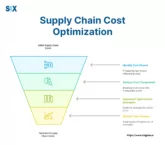
Image: Supply Chain Cost Optimization

Supply Chain Cost Optimization: A Blueprint to Slash Costs with Lean Six Sigma

Uncontrolled supply chain expenses are not just a line item on a balance sheet; they are a critical business vulnerability. From fluctuating fuel prices and geopolitical disruptions to shifting consumer demands, the pressure on supply chain leaders has never been more intense. Simply reacting to these challenges is no longer enough. To survive and grow, […]

View More

Image: Bartlett's Test

Bartlett’s Test: A Comprehensive Guide to Homogeneity of Variances

Similar characteristics are determined in multiple groups of data which requires statistical analysis. To assess different groups which have equal variances, Bartlett’s test is the tool you need! Key Highlights What is Bartlett’s Test? A property known as homogeneity of variances is examined by Bartlett’s test whether multiple groups in a dataset have equal variances. […]

View More

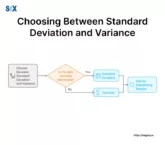
Image: Choosing between Standard Deviation vs Variance

Standard Deviation vs Variance. A Complete Guide for Data Analysis Professionals

Standard Deviation and Variance are crucial in comprehensive data analysis. It helps achieve actionable data that can further be used to optimize manufacturing processes, assess financial risk, or improve customer satisfaction. The insights gained from properly utilizing standard deviation and variance prove invaluable. By the end, you’ll be able to These skills are essential for […]

View More

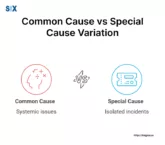
Image: Common Cause vs Special Cause Variation

Common Cause vs Special Cause Variation: A Guide to Process Control

In the world of quality management, not all variations are created equal. Understanding the difference between a common cause vs special cause variation is crucial for effective process control and continuous improvement. This comprehensive guide will breakdown the common cause vs special cause variation, providing actionable insights for professionals in quality management, process improvement, and […]

View More

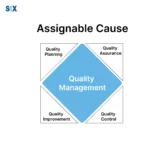
Image: Assignable Cause

Mastering Assignable Causes: A Comprehensive Guide for Quality Excellence

Quality exerts greater influence today as companies seek distinction through excellence. A core concept here involves appreciating assignable cause(s) – specific, discernible factors driving fluctuations or divergences in workflow or system outcomes. Regardless of your role as a quality leader, process engineer, or business manager, the capacity to pinpoint, investigate, and remedy assignable causes proves […]

View More

Image: Control Limits in Six Sigma

What are Control Limits? Leveraging Statistical Boundaries for Process Excellence

One indispensable tool that has consistently proven its value across various industries is the concept of control limits within Statistical Process Control (SPC). Control limits are the guardrails that delineate the acceptable range of variation within a process, acting as sentinels for detecting deviations and anomalies that could compromise quality and consistency.  By establishing these […]

View More

Image: Process Control in Lean Six Sigma

Process Control in Lean Six Sigma. Techniques & Implementation

Process control is a fundamental aspect of modern industrial and manufacturing operations. It refers to the systems, technologies, and methodologies used to monitor, regulate, and optimize the performance of manufacturing processes, production lines, and other complex operational environments. Want to become a process optimization expert who can transform industrial operations? Learn the tools and techniques […]

View More

Image: Process Variation in Lean Six Sigma

Process Variation in Lean Six Sigma. Everything to Know

Process variation is one of the most common obstacles I encounter that prevents organizations from reaching their potential.  At its core, process variation refers to uncontrolled or unexpected differences in a process’s outputs. While some degree of natural variability exists in all processes, excessive variation is the enemy of efficient, high-quality operations. Master Process Variation […]

View More

Image: Control Plan in Lean Six Sigma

Control Plan in Lean Six Sigma. Key Elements and Strategies

Quality control is a critical aspect of any manufacturing or service delivery process, and a well-designed control plan serves as a powerful tool to achieve this objective. It is a proactive approach to identifying and addressing potential sources of variation that could impact the quality of the final output. Transform your approach to quality management […]

View More

Featured Image: Lean Six Sigma Bell Curve

Normal Distribution in Lean Six Sigma. Learn the Bell Curve

Six Sigma is a quality management system that aims to decrease variance and errors in business processes. The strategy makes use of statistical analysis and a data-driven methodology to reduce inefficiencies in the process and attain enduring outcomes. Become a data-driven problem-solving expert Master the Bell Curve, your gateway to process excellence with Lean Six […]

View More

Featured image: What is Pooled Standard Deviation? How to Calculate It

What is Pooled Standard Deviation? How to Calculate It

The pooled standard deviation is an important statistical measure used to summarize and describe the amount of variability in a dataset that combines multiple samples or groups.  Unlike a regular standard deviation calculated on a single sample, the pooled standard deviation allows you to merge and blend the spread of separate groups into one overall […]

View More

Featured Image: Special Cause Variation

What is Special Cause Variation? How to Identify It?

Variations are inherent in any process and the sources of these variations play a crucial role in determining process performance and stability. While common cause variations are predictable and result from the process design itself, special cause variation arise due to unexpected factors and lead to process instability. Managing these special cause variations by identifying […]

View More

Featured Image: KPIV (Key Process Input Variable) for Business Success

KPIV (Key Process Input Variable) for Business Success

Key Process Input Variables (KPIVs) play a vital role in process improvement initiatives. They are inputs to a process that has a significant influence on the process performance and quality of process outputs. By identifying and focusing on these vital input variables, organizations can drive effective analysis, monitoring, and improvements of their business processes. KPIVs […]

View More

consistency-business-6sigma.us

Consistency Breeds Perfection In Business

Six Sigma methodologies focus on improving processes by reducing waste and defects. So in the world of Six Sigma, is multitasking considered bad?  Well it depends. If the computer you are using has a program that is able to execute a few jobs at once, then the answer is no. The reason for this is […]

View More