Articles

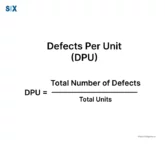
Image: Defects per Unit (DPU)

Defects Per Unit (DPU): Driving Quality Excellence in Manufacturing

Defects per unit (DPU) is an important metric for evaluating and optimizing manufacturing processes. DPU measures the average number of flaws found in a sample of made goods. This provides a real-world look at the quality and consistency of production. By calculating the ratio of total defects to total units produced, DPU serves as a […]


View More

Image: Acceptance Sampling

Acceptance Sampling: Elevating Product Quality Through Statistical Rigor

Maintaining quality is super important for business success. A really useful tool companies can use is acceptance sampling. Acceptance sampling is a stats-based method that lets businesses evaluate a batch or shipment of products by checking a representative sample. Instead of inspecting every single item, which can take a long time and cost a lot, […]

View More

Image: Out of Control Action Plan (OCAP)

Out of Control Action Plan (OCAP): A Proven Framework for Sustained Process Control

Keeping methods on track and actually meeting goals is incredibly important. Even the best-designed and implemented processes can experience hiccups or drifts that undermine results and productivity. This is where having an Out of Control Action Plan or OCAP makes a difference – it’s an essential contingency map for organizations to quickly tackle and fix […]

View More

Image: Improve Quality & Processes with First Pass Yield

First Pass Yield (FPY) in Manufacturing. Lean Six Sigma

Manufacturers must always improve their processes to keep costs down and customers happy. An important metric that has transformed how companies evaluate and boost the quality of their production is First Pass Yield or FPY. The FPY simply tells you what percentage of items go through the manufacturing process without needing any extra work or getting […]

View More

Image: Process Variation in Lean Six Sigma

Process Variation in Lean Six Sigma. Everything to Know

Process variation is one of the most common obstacles I encounter that prevents organizations from reaching their potential.  At its core, process variation refers to uncontrolled or unexpected differences in a process’s outputs. While some degree of natural variability exists in all processes, excessive variation is the enemy of efficient, high-quality operations. Master Process Variation […]

View More

Image: Process Failure Mode & Effects Analysis (PFMEA) in Lean Six Sigma

Process Failure Mode & Effects Analysis (PFMEA) in Lean Six Sigma

Even the most well-designed processes can be susceptible to failures, which can lead to defects, delays, and costly consequences. To proactively identify and mitigate potential risks, companies employ a powerful risk assessment tool known as Process Failure Mode and Effects Analysis (PFMEA). Master Risk Assessment with Six Sigma Yellow Belt Certification Transform your approach to […]

View More

Image: Capability Analysis for Process Improvement

Comprehensive Guide to Capability Analysis for Process Improvement

Capability analysis is a powerful statistical technique that allows companies to quantify their ability to meet customer specifications and requirements. By evaluating the performance of a process or characteristic against defined tolerance limits, capability analysis provides valuable insights into process potential and actual performance levels. Learn to quantify and improve process performance Master Capability Analysis […]

View More

Image: Control Plan in Lean Six Sigma

Control Plan in Lean Six Sigma. Key Elements and Strategies

Quality control is a critical aspect of any manufacturing or service delivery process, and a well-designed control plan serves as a powerful tool to achieve this objective. It is a proactive approach to identifying and addressing potential sources of variation that could impact the quality of the final output. Transform your approach to quality management […]

View More

six sigma

Six Sigma and Electric Mobility

The electric vehicle (EV) industry is booming and helping to usher in a renewable energy future. The demand for EVs has surged worldwide, posing a challenge for the industry to meet the escalating demand. However, Six Sigma, a management technique, is helping the industry solve its challenges in several ways, which we’ll examine in this […]

View More