Articles

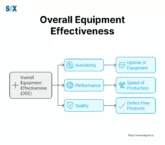
Image: What is Overall Equipment Effectiveness (OEE)

The Ultimate Guide to Overall Equipment Effectiveness (OEE): Mastering Calculation, Implementation, and Optimization

Efficiency isn’t just a goal—it’s a necessity for survival and growth. This is where Overall Equipment Effectiveness (OEE) comes into play, serving as the gold standard for measuring productivity and identifying opportunities for improvement in your operations. Key Highlights We’ll dive deep into the world of Overall Equipment Effectiveness (OEE), covering everything from basics to […]

View More

Image: Genchi Genbutsu

Genchi Genbutsu: A Way to First-Hand Process Observation

Imagine you’re a business leader faced with a persistent operational issue that’s hurting productivity and customer satisfaction. You’ve pored over reports, analyzed data, and held countless meetings, yet the root cause remains elusive. This disconnect between perception and reality is a common challenge that the Japanese philosophy of “genchi genbutsu” can help overcome. Genchi genbutsu, […]

View More

Image: Cycle Time vs Lead Time

The Definitive Guide to Cycle Time vs Lead Time

Efficiency and optimization are the names of the game. Whether you’re a manufacturer striving to streamline production or a project manager aiming to deliver on time, understanding metrics like cycle time vs lead time can be game-changers. But what exactly are cycle time and lead time? Cycle time measures the duration to complete one cycle […]

View More

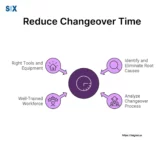
Image: Reduce Changeover Time

Reduce Changeover Time: Strategies for Manufacturing Efficiency

To reduce changeover time is not just a goal — it’s a necessity for staying ahead. Changeover time, defined as the period between the last good piece of one production run and the first good piece of the next, is a key factor in overall equipment effectiveness (OEE). Changeover time can transform production processes, leading […]

View More

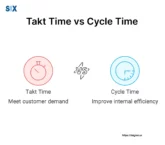
Image: Takt Time vs Cycle Time

Takt Time vs Cycle Time in Lean Manufacturing. A Complete Guide.

To effectively achieve lean manufacturing, two important things to know are takt time and cycle time. Takt time is the speed needed to make products to match what customers want. It’s calculated by dividing work time by what customers will buy. Cycle time is the actual time it takes to make one item fully from […]

View More

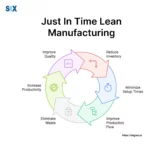
Image: A circular diagram showcasing the Just-in-Time Production System

Just-in-Time (JIT) in Lean Manufacturing? Toyota Production System

Companies are constantly refining workflows, reducing expenses, and boosting productivity. A hugely adopted, field-tested production technique stems from JIT — revolutionizing how the industry handles making and holding goods. Pioneered by Toyota, JIT’s philosophy revolves around reacting to actual demand rather than estimates. By minimizing what’s in stock and related carrying charges, just-in-time production system […]

View More

Image: Level Loading

Level Loading: Unlocking Efficiency with Lean Production Leveling

For companies constantly seeking to streamline operations and boost efficiency, level loading has become an important principle. Also known as production leveling or heijunka, this concept revolutionized manufacturing approaches after taking hold in Toyota’s groundbreaking system. Level loading aims to cut unevenness or variation in output, reducing waste and bettering performance overall. Generating intermediate goods […]

View More

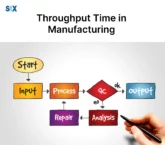
Throughput Time in Manufacturing. Definition, Benefits, and More

These days, speed and flexibility are everything for keeping ahead of rivals. A major metric companies rely on for measuring and refining performance is throughput time. Also called lead time or cycle time, it’s the full duration needed to complete a process or deliver a product/service to a client — from request received to final […]

View More

Image: Assignable Cause

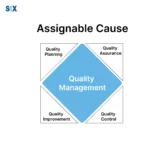
Mastering Assignable Causes: A Comprehensive Guide for Quality Excellence

Quality exerts greater influence today as companies seek distinction through excellence. A core concept here involves appreciating assignable cause(s) – specific, discernible factors driving fluctuations or divergences in workflow or system outcomes. Regardless of your role as a quality leader, process engineer, or business manager, the capacity to pinpoint, investigate, and remedy assignable causes proves […]

View More

Image: First Time Yield (FTY)

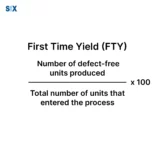
First Time Yield (FTY): Driving Process Efficiency & Quality

Efficiency and minimizing re-dos are crucial for success. A major metric impacting streamlining and affordability directly is First Time Yield or FTY. First Time Yield, a core Six Sigma building block, measures the percentage of units or products smoothly completing a process without defects or needing re-dos on the first try. Focusing on First Time […]

View More

Image: Cycle Time vs Throughput Time

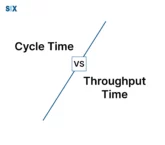
Cycle Time vs Throughput Time. All You Need to Know

Efficiency and output emerge as hugely consequential in manufacturing and creation. Critical estimations conveying functional awareness incorporate cycle time and throughput time. While regularly mistakenly utilized reciprocally, they speak to clear theories basic for comprehending and enhancing business presentation. Cycle time, otherwise called handling time or running time, totals the period from one cycle or […]

View More

Image: Cycle Time

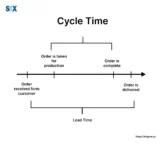
Understanding Cycle Time: Definition, Calculation, and Importance

For enterprises crafting, producing, or running workflows repetitively, cycle time/duration is crucial for effectiveness estimation and better spotting. Cycle time, likewise termed lead time alludes to a full period from starting one repeating assignment to end whether vehicle assembly lines, programming undertakings, or building activities, abbreviating it unlocks refined functioning, waste deduction, and greatest yields. […]

View More

Image: Defect Concentration

Complete Guide to Defect Concentration Diagram in Lean Six Sigma

Finding and fixing flaws in products is super important. Defect Concentration Diagram or DCD have become a helpful visual method teams use. These diagrams provide an easy-to-understand picture of where faults happen, how often, and if there is a pattern. They map issues right onto a graphic of the item or part. DCDs offer a […]

View More

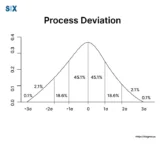
Image: Process Deviation

Process Deviation for Manufacturing and Operational Success

Strict adherence to defined manufacturing and operational processes is crucial in regulated industries to ensure quality, safety, and compliance. However, unplanned variations/deviation in process do occasionally occur due to human or equipment factors. Such “process deviations” from approved specifications can range from minor to major and potentially compromise standards if not promptly addressed. Identifying, investigating, […]

View More

Image: Lean Engineering

What is Lean Engineering? Principles, Tools, and Implementation Strategies

Companies always look for ways to work leaner, waste less, and give customers more value. Methodologies like Lean Engineering and Six Sigma certification provide structured approaches to achieve these goals. Lean Engineering is a holistic approach promising to change how engineering departments function. It aims to foster innovation, flexibility, and constant improvement. Lean Engineering is […]

View More

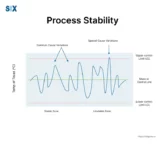
Image: Process Stability

The Definitive Guide to Achieving and Sustaining Process Stability

Ensuring processes are working smoothly is so important for any company that wants satisfied customers and to run well. Understanding and keeping processes steady over time is key to process stability. Where customer satisfaction and operational efficiency are paramount, understanding and maintaining process stability is crucial for success. The intricacies of process stability, exploring its […]

View More

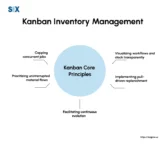
Image: Kanban Inventory Management in Lean Manufacturing

Kanban Inventory Management in Lean Manufacturing. Everything to Know

Effective stock handling proves crucial for reducing costs while satisfying customers. Common methods yield excess, lengthened wait times, and inflated carrying fees. Kanban presents a lean, visual alternative. Derived from Toyota Production Systems, the Japanese “signal card” optimizes materials and work-in-progress transparency across making. Pull-based, it employs visual cues and cards regulating flows between steps. […]

View More

Image: What is Mura in Toyota Production System

What is Mura, Toyota Production System? All You Need to Know

Mura, a Japanese term, denotes unevenness within manufacturing or workflow. It comprises one type of waste alongside muda and muri per the Toyota Production System, lean’s foundation. Forms involve demand fluctuations, unbalanced workloads, and variable cycle times. Mura enables muri, overburdening employees, tools, and processes. This decreases productivity and quality while wasting resources. Thus eliminating […]

View More

Image: Improve Quality & Processes with First Pass Yield

First Pass Yield (FPY) in Manufacturing. Lean Six Sigma

Manufacturers must always improve their processes to keep costs down and customers happy. An important metric that has transformed how companies evaluate and boost the quality of their production is First Pass Yield or FPY. The FPY simply tells you what percentage of items go through the manufacturing process without needing any extra work or getting […]

View More

Image: Lean and Agile

Lean and Agile: How Can They Make a Difference to Your Business

Lean vs agile is the quintessential question businesses often find themselves in dilemmas about. Modern organizations have diverse processes that are highly variable. Ideally, businesses should be using both lean and agile approaches in their processes, based on their nature. The combined approach, instead of deciding between lean and agile, is often the most beneficial […]

View More