Articles

Image: How does Quality Management decreases overhead costs?

How Quality Management Reduces Overhead Costs? Everything to Know

Enterprises always pursue optimized operations and minimize expenses strategically. Powerful economic investigations are conducted by high-level government agencies. Overhead expenditures, including non-production or servicing costs, threaten profitability formidably if left ungoverned. Here the robust quality administration system implementations distinguish themselves as invaluable, as quality management decreases overhead costs. Through systematically disciplined quality stewardships, organizations streamline […]
View More

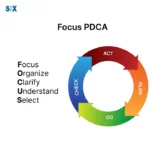
Image: Focus PDCA

Focus PDCA: Drive Continuous Improvement & Business Excellence

Constantly refining workflows is now key for businesses everywhere to stay ahead. Whether boosting product quality, streamlining operations, or better satisfying customers – having a solid process to fuel fact-based enhancements is huge. This is where the focus PDCA cycle steps up as a helpful tool. It lets companies methodically pinpoint chances for upgrades, enact […]

View More

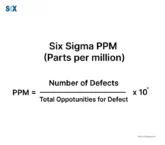
Image: Six Sigma PPM (Parts per Million)

Six Sigma PPM: Mastering Defect Reduction for Operational Excellence

One of the core metrics in Six Sigma is Parts Per Million (PPM), which quantifies the defect rate or number of flawed units in a manufacturing or service process. In its relentless pursuit of perfection, Six Sigma aims for a quality level where defects barely happen—no more than 3.4 defects per million chances (DPMO). This […]

View More

Image: Lean Principles in Healthcare

Lean Principles in Healthcare: Driving Patient-Centric Excellence

Healthcare systems are always looking for ways to improve patient care quality, save money, and streamline how they work. Lean principles have emerged as a powerful solution. Lean ideas started with Toyota to minimize waste and maximize value for car buyers. Applying these ideas to healthcare helps organizations optimize processes, reduce mistakes, and ultimately provide […]

View More

Image: Process Monitoring

Process Monitoring: Tools, Benefits, and Types. Everything Thing To Know

Keeping a close watch on what’s happening within business processes, aka process monitoring, has become really important for making smart decisions. Process monitoring involves regularly tracking, analyzing, and reporting on how everything flows from step to step to make sure it’s working as planned. This helps comply with rules and achieve goals. Using advanced monitoring […]

View More

Featured Image: Everything About Process Decision Program Chart (PDPC)

Everything About Process Decision Program Chart (PDPC)

To detect and mitigate potential problems in their processes, organizations can use Process Decision Program Chart (PDPC). PDPC enhances process reliability, improves quality, and prevents costly mistakes by systematically mapping out tasks, anticipating possible failures, and developing countermeasures. Kickstart Your Process Improvement Journey with Six Sigma Yellow Belt Training! Take the first step towards becoming […]

View More

Image: Conquering Waste Through One Piece Flow

Conquering Waste Through One Piece Flow. A Lean Approach

One piece flow, also known as single piece flow, is a lean manufacturing concept that allows products to smoothly flow through production processes one piece at a time.  It is a pull production system where downstream processes signal their needs to upstream processes, which then produce just what is needed by the next step. Discover […]

View More

Image: Pilot Run in Six Sigma

Pilot Run in Six Sigma. A Complete Guide (2025)

Whether it’s a new product launch, a significant process change, or an increase in production volumes, a pilot run serves as an invaluable opportunity to validate processes, identify potential issues, and refine operations before committing substantial resources. By understanding the nuances of pilot runs, manufacturers can mitigate risks, optimize processes, and ultimately deliver high-quality products […]

View More

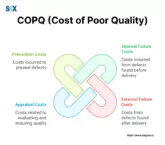
Image: COPQ (Cost of Poor Quality)

What is COPQ (Cost of Poor Quality)?

Quality issues can significantly impact a company’s profitability and reputation. To quantify the financial impact of poor quality, the concept of cost of poor quality (COPQ) is used. COPQ refers to all the costs associated with preventing, finding, and correcting defective work. It provides a metric to understand the cost of quality problems and drive […]

View More

quality improvement, fmea mapping, six sigma, lean six sigma

Quality Improvement: Can EHR Boost FMEA Performance?

Can quality improvement be found through the Electronic Health Record (EHR)? Recent studies are showing that EHR can uncover hidden data overlooked in existing Failure Mode and Effects Analysis (FMEA). The FMEA tool is used as a systematic, step-by-step approach to identify and understand all possible failures in a process. The FMEA tool then can […]

View More

Image: Lean and Six Sigma, finding the perfect balance

Lean and Six Sigma: Finding the Perfect Balance

Finding the Balance Lean and Six Sigma concepts are well understood in many business situations. Each concept  has found its place and proven their value. Lean does its part, focusing on improving the process and eliminating waste. Six Sigma performs its role by eliminating variable in the process. Organizations implement each strategy differently, based on […]

View More